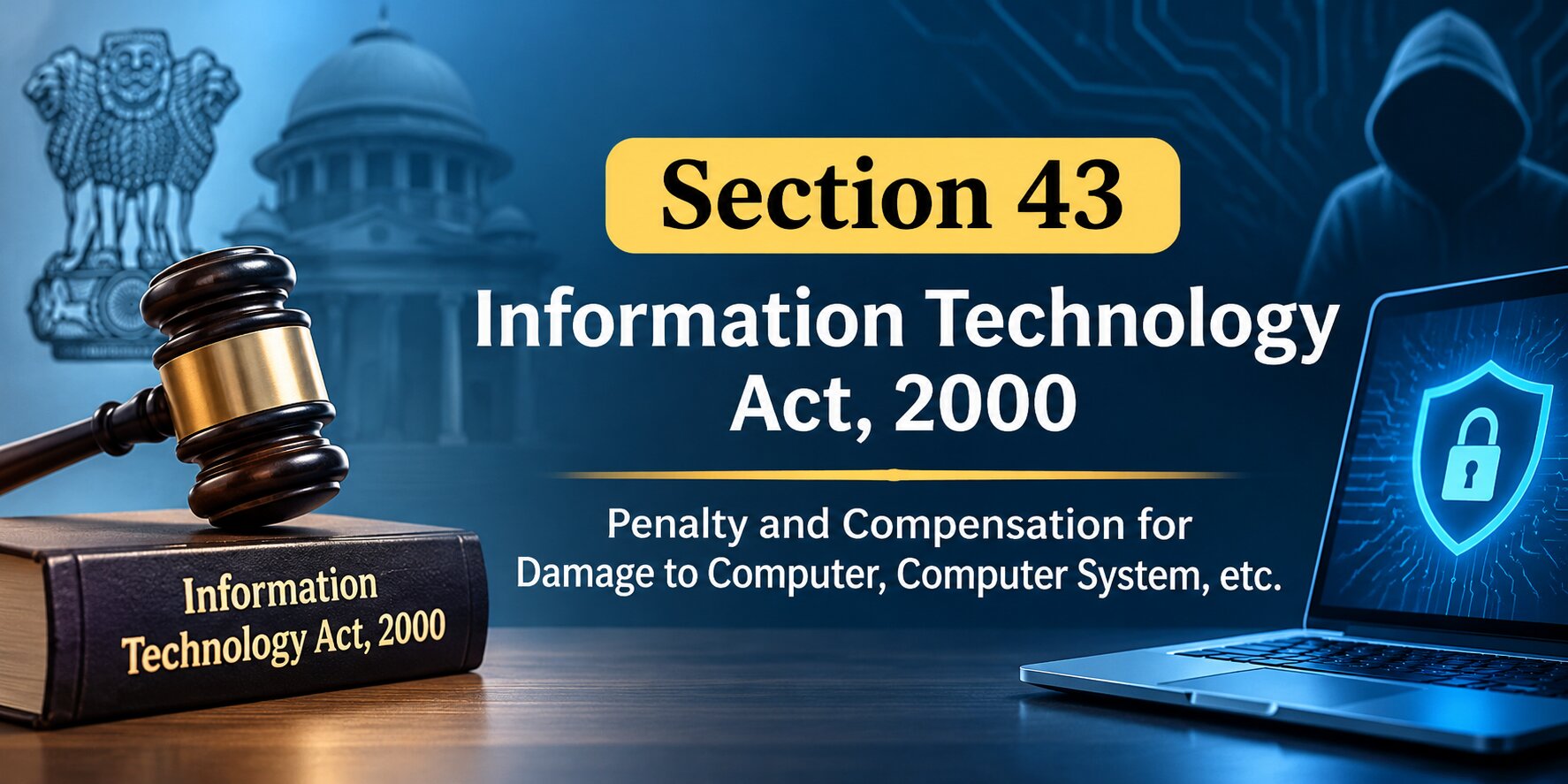
- Section 43 of IT Act 2000: Penalty and compensation for damage to computer, computer system, etc.
- Explained:
- Section 43(a) – Unauthorised access
- Section 43(b) – Downloading, copying or extracting data
- Section 43(c) – Introduction of computer contaminants or viruses
- Section 43(d) – Damage to computer systems or data
- Section 43(e) – Disruption of computer services
- Section 43(f) – Denial of access
- Section 43(g) – Assistance in unauthorised access
- Section 43(h) – Manipulation of computer services or billing
- Section 43(i) – Destruction, deletion or alteration of information
- Section 43(j) – Theft or alteration of computer source code
- Explanation of Important Terms Under Section 43
- Compensation and Legal Consequences Under Section 43
- Important Judgments
- Conclusion
Section 43 of IT Act 2000: Penalty and compensation for damage to computer, computer system, etc.
If any person without permission of the owner or any other person who is in charge of a computer, computer system or computer network,—
(a) accesses or secures access to such computer, computer system or computer network or computer resource;
(b) downloads, copies or extracts any data, computer data base or information from such computer, computer system or computer network including information or data held or stored in any removable storage medium;
(c) introduces or causes to be introduced any computer contaminant or computer virus into any computer, computer system or computer network;
(d) damages or causes to be damaged any computer, computer system or computer network, data, computer data base or any other programmes residing in such computer, computer system or computer network;
(e) disrupts or causes disruption of any computer, computer system or computer network;
(f) denies or causes the denial of access to any person authorised to access any computer, computer system or computer network by any means;
(g) provides any assistance to any person to facilitate access to a computer, computer system or computer network in contravention of the provisions of this Act, rules or regulations made thereunder;
(h) charges the services availed of by a person to the account of another person by tampering with or manipulating any computer, computer system, or computer network;
(i) destroys, deletes or alters any information residing in a computer resource or diminishes its value or utility or affects it injuriously by any means;
(j) steals, conceals, destroys or alters or causes any person to steal, conceal, destroy or alter any computer source code used for a computer resource with an intention to cause damage;
he shall be liable to pay damages by way of compensation to the person so affected.
Explanation
(i) “computer contaminant” means any set of computer instructions that are designed—
(a) to modify, destroy, record, transmit data or programme residing within a computer, computer system or computer network; or
(b) by any means to usurp the normal operation of the computer, computer system, or computer network;
(ii) “computer data-base” means a representation of information, knowledge, facts, concepts or instructions in text, image, audio, video that are being prepared or have been prepared in a formalised manner or have been produced by a computer, computer system or computer network and are intended for use in a computer, computer system or computer network;
(iii) “computer virus” means any computer instruction, information, data or programme that destroys, damages, degrades or adversely affects the performance of a computer resource or attaches itself to another computer resource and operates when a programme, data or instruction is executed or some other event takes place in that computer resource;
(iv) “damage” means to destroy, alter, delete, add, modify or rearrange any computer resource by any means;
(v) “computer source code” means the listing of programme, computer commands, design and layout and programme analysis of computer resource in any form.
Explained:
Section 43(a) – Unauthorised access
This clause covers accessing or obtaining access to a computer, computer system, network or computer resource without permission. Access may include entering a system, database or digital platform without authorisation.
For example, accessing another person’s email account or an organisation’s server without permission may attract this provision.
Section 43(b) – Downloading, copying or extracting data
The provision covers unauthorised downloading, copying or extraction of information, including data stored on removable storage devices. It protects databases, business records, confidential information and digital files against unauthorised copying.
Section 43(c) – Introduction of computer contaminants or viruses
Introducing malicious software, viruses or other computer contaminants into a computer system or network is covered under this clause. Such software may interfere with operations, damage files, transmit information or compromise system functionality.
Section 43(d) – Damage to computer systems or data
This clause covers damage to computers, networks, databases, data and programmes. Damage may involve destruction, alteration or impairment of the computer resource.
Section 43(e) – Disruption of computer services
Disrupting the functioning of a computer, system or network may attract liability. An act that interferes with the normal operation of a digital service, making it unavailable or unstable, may fall within this clause.
Section 43(f) – Denial of access
This clause protects authorised users from being prevented from accessing a computer system or network. For example, deliberately locking an employee or administrator out of an authorised system may constitute denial of access.
Section 43(g) – Assistance in unauthorised access
A person who assists another individual in facilitating access in contravention of the Act, rules or regulations may also be liable. The provision is not limited to the person who directly accesses the system; assistance can also be covered.
Section 43(h) – Manipulation of computer services or billing
This clause addresses tampering with or manipulating a computer system or network so that services used by one person are charged to another person’s account. It is intended to address unauthorised manipulation resulting in financial or service-related loss.
Section 43(i) – Destruction, deletion or alteration of information
This provision covers destroying, deleting or altering information residing in a computer resource. It also includes acts that diminish the value or utility of information or affect it injuriously.
Section 43(j) – Theft or alteration of computer source code
This clause deals with stealing, concealing, destroying or altering computer source code, or causing such acts to be carried out, with the intention of causing damage. Source code is an important component of software development and system functionality, and unauthorised interference may cause substantial commercial and technical loss.
Explanation of Important Terms Under Section 43
Computer contaminant: A set of computer instructions designed to modify, destroy, record or transmit data or programmes, or interfere with the normal functioning of a computer system.
Computer database: Information, knowledge, facts, concepts or instructions represented in text, images, audio or video and prepared or produced for use in a computer resource.
Computer virus: A programme or instruction that damages, degrades or adversely affects a computer resource, or attaches itself to another resource and operates when triggered.
Damage: Under Section 43, damage includes destroying, altering, deleting, adding, modifying or rearranging a computer resource by any means.
Computer source code: The listing of programmes, commands, design, layout and programme analysis of a computer resource in any form.
These definitions broaden the scope of Section 43 and enable it to address different forms of interference with digital resources. IndiaCode+1
Compensation and Legal Consequences Under Section 43
Section 43 provides for damages by way of compensation to the person affected by the unauthorised act. The provision is primarily concerned with the loss or damage caused to the affected person, whether through interference with computer systems, data, information or digital resources.
The affected person may seek compensation through the adjudication mechanism provided under the Information Technology Act, subject to the applicable jurisdiction, procedure and legal requirements. The nature of the loss, evidence of the unauthorised act and the consequences suffered may be relevant while determining liability.
Section 43 is also closely connected with Section 66 of the Act. Where the acts described under Section 43 are committed dishonestly or fraudulently, they may attract criminal consequences under Section 66. Therefore, an act may give rise to compensation liability under Section 43 and, depending on the facts and required mental element, criminal liability under Section 66.
Important Judgments
1. Gagan Harsh Sharma v. State of Maharashtra (2018)
In this case, the Bombay High Court considered the use of provisions of the Information Technology Act in the context of a dispute involving company-related matters and source code. The Court observed that criminal provisions under Sections 43 and 66 should not be used as a substitute for resolving a private civil or commercial dispute.
Legal significance: The judgment highlights that the nature of the dispute and the ingredients of the alleged cyber offence must be carefully examined before invoking criminal proceedings under the Information Technology Act.
2. Sharat Babu Digumarti v. Government of NCT of Delhi
The Supreme Court examined the application of the Information Technology Act in relation to electronic content and the relationship between the special legislation and other criminal law provisions.
Legal significance: The judgment reinforces the importance of applying the specific provisions of the Information Technology Act to matters involving electronic communication and cyber-related conduct, depending on the facts and applicable statutory provisions.
3. Supreme Court consideration of Sections 43 and 66
Judicial interpretation recognises an important distinction between the conduct covered by Section 43 and the additional requirements under Section 66. Section 43 addresses specified unauthorised acts and compensation, while Section 66 requires that the relevant act be committed dishonestly or fraudulently for criminal liability to arise under that section.
This distinction is significant because unauthorised access or interference does not automatically establish every element of a criminal offence. The facts, evidence and applicable legal ingredients must be examined independently. Sci API+1
Conclusion
Section 43 of the Information Technology Act, 2000, provides an important legal safeguard against unauthorised access, data theft, computer viruses, system disruption, manipulation of digital services and damage to computer resources. Its ten clauses cover a broad range of activities capable of causing harm to individuals, businesses and organisations.
The provision is particularly relevant in the modern digital environment, where information and computer systems are essential to financial transactions, communication, business operations and government services. By providing a mechanism for compensation, Section 43 helps protect the interests of persons affected by unauthorised digital activities.
For legal understanding, Section 43 should be studied together with Section 66, Section 46 and other relevant provisions of the Information Technology Act, 2000. The distinction between civil compensation and criminal liability is particularly important when analysing cybercrime cases.



Leave a Reply