
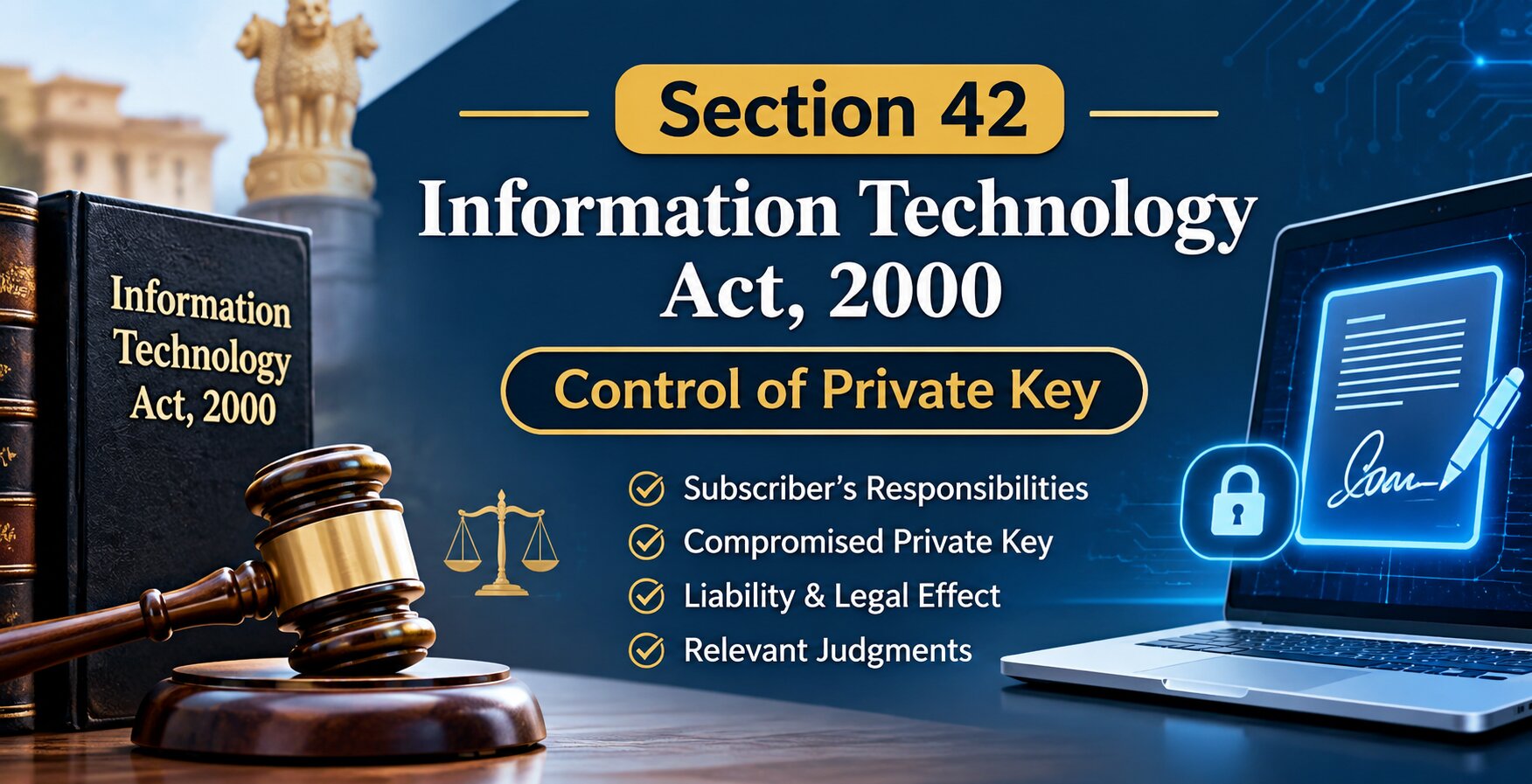
Section 42 of IT Act 2000: Control of private key
Section 42(1)
Every subscriber shall exercise reasonable care to retain control of the private key corresponding to the public key listed in his Digital Signature Certificate and take all steps to prevent its disclosure.
Section 42(2)
If the private key corresponding to the public key listed in the Digital Signature Certificate has been compromised, then, the subscriber shall communicate the same without any delay to the Certifying Authority in such manner as may be specified by the regulations.
Explanation.— For the removal of doubts, it is hereby declared that the subscriber shall be liable till he has informed the Certifying Authority that the private key has been compromised.
Explained:
1. Section 42(1): Responsibility to Maintain Control of Private Key
The first subsection imposes a duty on every subscriber to exercise reasonable care in maintaining control over the private key associated with the public key mentioned in their Digital Signature Certificate.
To understand this provision, it is important to distinguish between a public key and a private key.
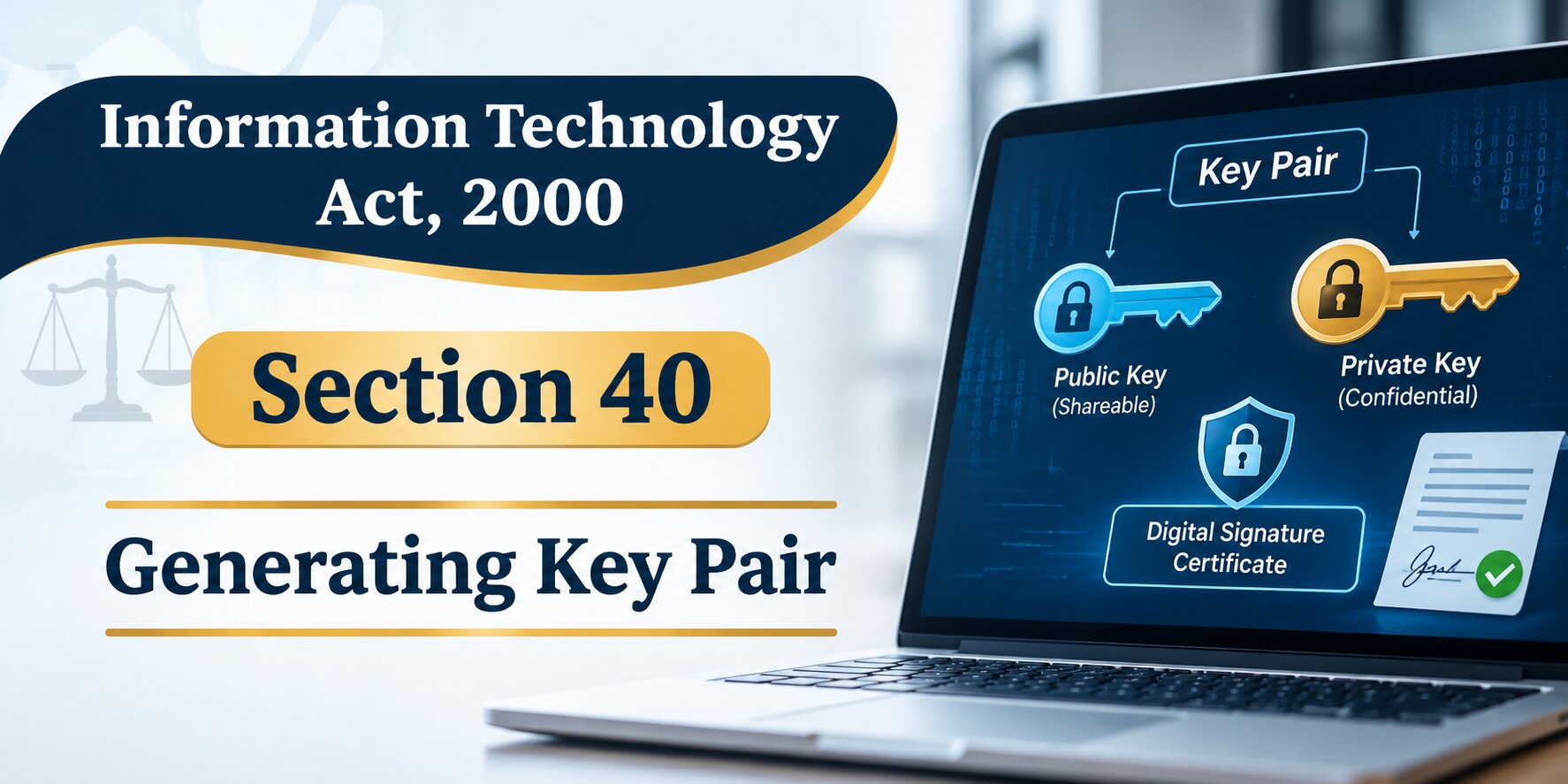
- Public Key: It is used by others to verify a digital signature and is associated with the Digital Signature Certificate.
- Private Key: It is a confidential cryptographic key used by the subscriber to create a digital signature.
- Digital Signature Certificate: It is an electronic certificate issued by a licensed Certifying Authority that associates the subscriber’s identity with the relevant public key.
The private key must remain under the subscriber’s control. If another person obtains unauthorised access to it, that person may potentially create electronic signatures that appear to originate from the subscriber.
For example, suppose a company director uses a Digital Signature Certificate to sign corporate documents. If the director shares the private key or leaves it accessible on an unsecured computer, another person may misuse it to authenticate documents without permission.
Section 42(1) requires subscribers to take reasonable security precautions. These may include protecting passwords, using secure devices, restricting access to cryptographic tokens and avoiding the sharing of private-key credentials.
2. Section 42(2): Duty to Inform the Certifying Authority
The second subsection deals with situations where a private key has been compromised.
A private key may be compromised due to theft, hacking, unauthorised copying, loss of a cryptographic token or disclosure of confidential authentication credentials.
In such circumstances, the subscriber must communicate the compromise to the concerned Certifying Authority without delay and in the manner prescribed by the applicable regulations.
This requirement is important because the Certifying Authority needs to take appropriate steps concerning the Digital Signature Certificate, including suspension or revocation where legally required.
For instance, if a subscriber discovers that their digital signature token has been stolen, simply changing the computer password may not be sufficient. The subscriber should immediately notify the Certifying Authority through the prescribed process.
3. Explanation to Section 42: Continuation of Liability
The explanation clarifies an important aspect of subscriber liability.
It expressly states that the subscriber remains liable until the Certifying Authority has been informed that the private key has been compromised.
In practical terms, discovering that a private key has been stolen does not, by itself, complete the subscriber’s statutory notification obligation.
The subscriber should preserve evidence of the incident and the communication sent to the Certifying Authority. This may include complaint acknowledgements, emails, official notifications and other relevant records.
This provision encourages prompt reporting and helps prevent further misuse of compromised digital credentials.
Relationship Between Section 42 and Other Provisions of the IT Act
Section 42 should be read along with other provisions governing Digital Signature Certificates and subscriber responsibilities.
| Provision | Subject | Relevance |
|---|---|---|
| Section 35 | Issue of Digital Signature Certificate | Governs issuance of certificates |
| Section 36 | Representations upon issuance | Prescribes representations by Certifying Authorities |
| Section 37 | Suspension of certificate | Provides for suspension in specified circumstances |
| Section 38 | Revocation of certificate | Deals with cancellation of certificates |
| Section 39 | Notice of suspension or revocation | Requires publication of relevant notices |
| Section 40 | Generating key pair | Deals with generation of cryptographic keys |
| Section 41 | Acceptance of certificate | Explains when a subscriber accepts a certificate |
| Section 42 | Control of private key | Establishes subscriber responsibilities |
These provisions work together to maintain the reliability of digital signature systems. In particular, Sections 37 and 38 are important when a subscriber reports that a private key has been compromised. India Code+2
Important Judgments and Judicial Decisions
There are limited reported judicial decisions directly interpreting Section 42. Therefore, it is important not to incorrectly describe general electronic-evidence judgments as direct rulings on private-key liability. The following decisions provide relevant legal context.
1. Trimex International FZE Ltd. v. Vedanta Aluminium Ltd. (2010)
The Supreme Court considered whether contractual arrangements concluded through email communications could create a binding agreement.
Relevance: The judgment recognises the legal significance of electronic communications in commercial transactions. It provides useful background for understanding the growing importance of electronic authentication and secure digital transactions.
2. Anvar P.V. v. P.K. Basheer (2014)
The Supreme Court examined the requirements for admitting electronic records as evidence under Section 65B of the Indian Evidence Act, 1872.
Relevance: The decision demonstrates that electronic records must satisfy applicable evidentiary requirements before they can be relied upon in judicial proceedings. This is relevant where a dispute involves electronically signed documents or records allegedly authenticated using a compromised private key.
3. Arjun Panditrao Khotkar v. Kailash Kushanrao Gorantyal (2020)
The Supreme Court clarified the requirements concerning certification and admissibility of electronic evidence under Section 65B of the Indian Evidence Act, 1872.
Relevance: The judgment is important when electronic records are produced to establish the circumstances surrounding a digital transaction. It also highlights the distinction between establishing the existence of an electronic signature and proving an electronic record in court.
Important clarification: These judgments provide broader context concerning electronic transactions and evidence. They should not be presented as direct judicial interpretations of Section 42 itself.
Practical Examples of Section 42
The application of Section 42 can be understood through the following situations.
Example 1: Theft of a Digital Signature Token
A company director loses a USB token containing the credentials required to use a Digital Signature Certificate. If the director discovers that the token may have been accessed by another person, the director should immediately inform the Certifying Authority and follow the prescribed procedure for suspension or revocation.
Example 2: Unauthorised Use of a Private Key
An employee obtains access to an employer’s private key and uses it to sign electronic documents without authorisation. This may raise questions concerning unauthorised access, misuse of digital credentials and the validity of the resulting transactions.
Example 3: Sharing Digital Signature Credentials
A professional shares their private-key credentials with another person to complete online filings. Such conduct may create security risks and raise questions about compliance with the duty to retain control of the private key under Section 42.
Important Precautions for Digital Signature Certificate Holders
Subscribers should follow these precautions to avoid disputes and possible legal consequences:
- Never share private keys, passwords or confidential authentication credentials with unauthorised persons.
- Keep digital signature tokens in a secure location.
- Use trusted computers and secure authentication systems.
- Avoid storing private-key credentials in publicly accessible devices.
- Immediately notify the Certifying Authority if a private key is lost, stolen or compromised.
- Preserve evidence of complaints and communications sent to the Certifying Authority.
- Follow the applicable procedures for suspension or revocation of the Digital Signature Certificate.
Conclusion
Section 42 of the Information Technology Act, 2000, establishes an important legal responsibility for every subscriber holding a Digital Signature Certificate. It requires subscribers to exercise reasonable care in protecting their private keys and to take appropriate measures to prevent unauthorised disclosure.
The provision also makes it clear that a subscriber remains liable until the Certifying Authority is informed about the compromise of the private key. This requirement encourages timely reporting and helps maintain confidence in electronic transactions.
With the increasing use of digital signatures in corporate filings, taxation, banking, government services and commercial agreements, compliance with Section 42 has become particularly important. Every Digital Signature Certificate holder should understand their responsibilities and maintain proper security practices to prevent misuse.
Understanding Sections 40, 41 and 42 together provides a clearer picture of the duties imposed on subscribers under Indian cyber law.
Leave a Reply