

Section 24 of IT ACT 2000:
The Controller may, on receipt of an application under sub-section (1) of section 21, after considering the documents accompanying the application and such other factors, as he deems fit, grant the licence or reject the application:
Provided that no application shall be rejected under this section unless the applicant has been given a reasonable opportunity of presenting his case.
Explained:
Authority to grant or reject a licence
Section 24 empowers the Controller of Certifying Authorities to grant or reject an application for a licence.
The Controller is the statutory authority responsible for supervising the functioning of Certifying Authorities under the Information Technology Act.
A Certifying Authority plays an important role in the electronic authentication system by issuing electronic signature certificates in accordance with the applicable legal framework.
The Controller must examine whether an applicant satisfies the relevant statutory and regulatory requirements before granting permission to operate.
Application under Section 21(1)
Section 24 specifically refers to an application made under Section 21(1) of the Information Technology Act, 2000.
Section 21 requires a person intending to issue electronic signature certificates to obtain the appropriate licence from the Controller.
Therefore, an organisation cannot simply begin operating as a licensed Certifying Authority without following the prescribed approval procedure.
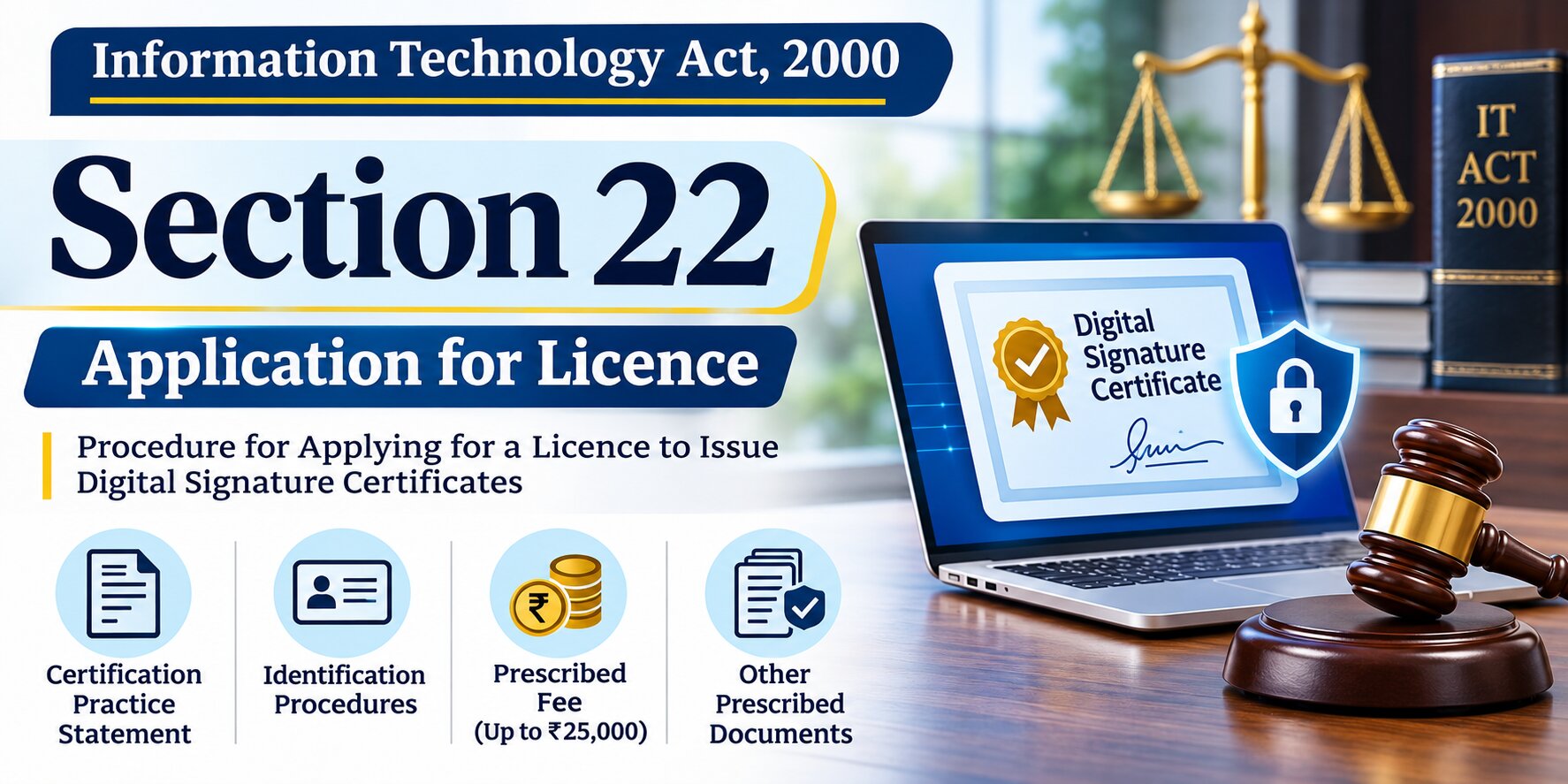
Section 22 further specifies the requirements for applying for a licence, including the prescribed application form, certification practice statement, identification procedures, applicable fees and other required documents. India Code+1
Examination of documents submitted with the application
The Controller must consider the documents accompanying the licence application.
These documents help determine whether the applicant possesses the necessary organisational arrangements, technical capabilities and procedures to perform the functions of a Certifying Authority.
For example, the applicant’s certification practice statement may describe how certificates will be issued, managed and authenticated.
Proper examination is important because weaknesses in certification procedures could undermine trust in electronic transactions.
Consideration of other relevant factors
Section 24 also permits the Controller to consider other factors considered appropriate while deciding an application.
This gives the Controller discretion to evaluate relevant circumstances beyond the documents initially submitted.
However, discretionary authority must be exercised lawfully, reasonably and consistently with the objectives of the Act.
The provision does not authorise decisions based on irrelevant considerations, discrimination or personal preference.
Proviso: Reasonable opportunity of presenting the case
The proviso is one of the most important safeguards under Section 24.
It expressly prohibits rejection of a licence application unless the applicant has been given a reasonable opportunity to present their case.
This requirement reflects the principle of natural justice known as audi alteram partem, meaning that the affected party must be heard.
For instance, if the Controller identifies deficiencies in an application, the applicant must receive a reasonable opportunity to address the concerns before rejection.
The precise procedure depends on the applicable rules and circumstances. Section 24 does not expressly require a personal hearing in every case.
Important Judgments Relevant to Section 24
The following Supreme Court judgments explain principles of natural justice, administrative discretion and fair decision-making relevant to Section 24. These cases do not directly interpret the licensing procedure under Section 24.
1. Swadeshi Cotton Mills v. Union of India (1981)
Citation: (1981) 1 SCC 664
The Supreme Court examined the application of natural justice when government authorities exercise statutory powers affecting the interests of individuals or organisations.
The Court recognised the importance of providing an opportunity of hearing, subject to the governing statute and circumstances.
Relevance to Section 24: The judgment supports the principle that an applicant facing rejection of a licence should receive the procedural protection expressly provided by law. Indian Kanoon
2. Mohinder Singh Gill v. Chief Election Commissioner (1978)
Citation: (1978) 1 SCC 405
The Supreme Court discussed the importance of fairness in administrative decision-making and the application of natural justice where governmental decisions affect individuals.
Relevance to Section 24: The judgment helps explain why the Controller’s discretion must be exercised fairly and within the limits of statutory authority. Indian Kanoon
3. Kranti Associates Pvt. Ltd. v. Masood Ahmed Khan (2010)
Citation: (2010) 9 SCC 496
The Supreme Court emphasised the importance of recording reasons in judicial, quasi-judicial and administrative decisions affecting the interests of parties.
Reasoned decisions promote transparency, accountability and meaningful judicial review.
Relevance to Section 24: Where a licence application is rejected, communicating clear reasons can help demonstrate that the Controller considered the relevant materials and exercised discretion lawfully. Indian Kanoon
Importance of Section 24 in Digital Signature Regulation
Section 24 plays an important role in maintaining confidence in India’s electronic authentication infrastructure.
Certifying Authorities provide services that support the authentication of electronic records and digital transactions. Weak verification procedures or inadequate security arrangements could expose users to fraud, impersonation and misuse of electronic certificates.
The licensing procedure therefore serves several purposes:
- It enables regulatory scrutiny before an applicant begins operating as a Certifying Authority.
- It supports compliance with applicable technical and security requirements.
- It promotes accountability in the electronic certification system.
- It protects applicants through the requirement of a reasonable opportunity to be heard before rejection.
Difference Between Sections 21, 22, 23, 24 and 25
| Section | Subject |
|---|---|
| Section 21 | Licence to issue electronic signature certificates |
| Section 22 | Application for licence |
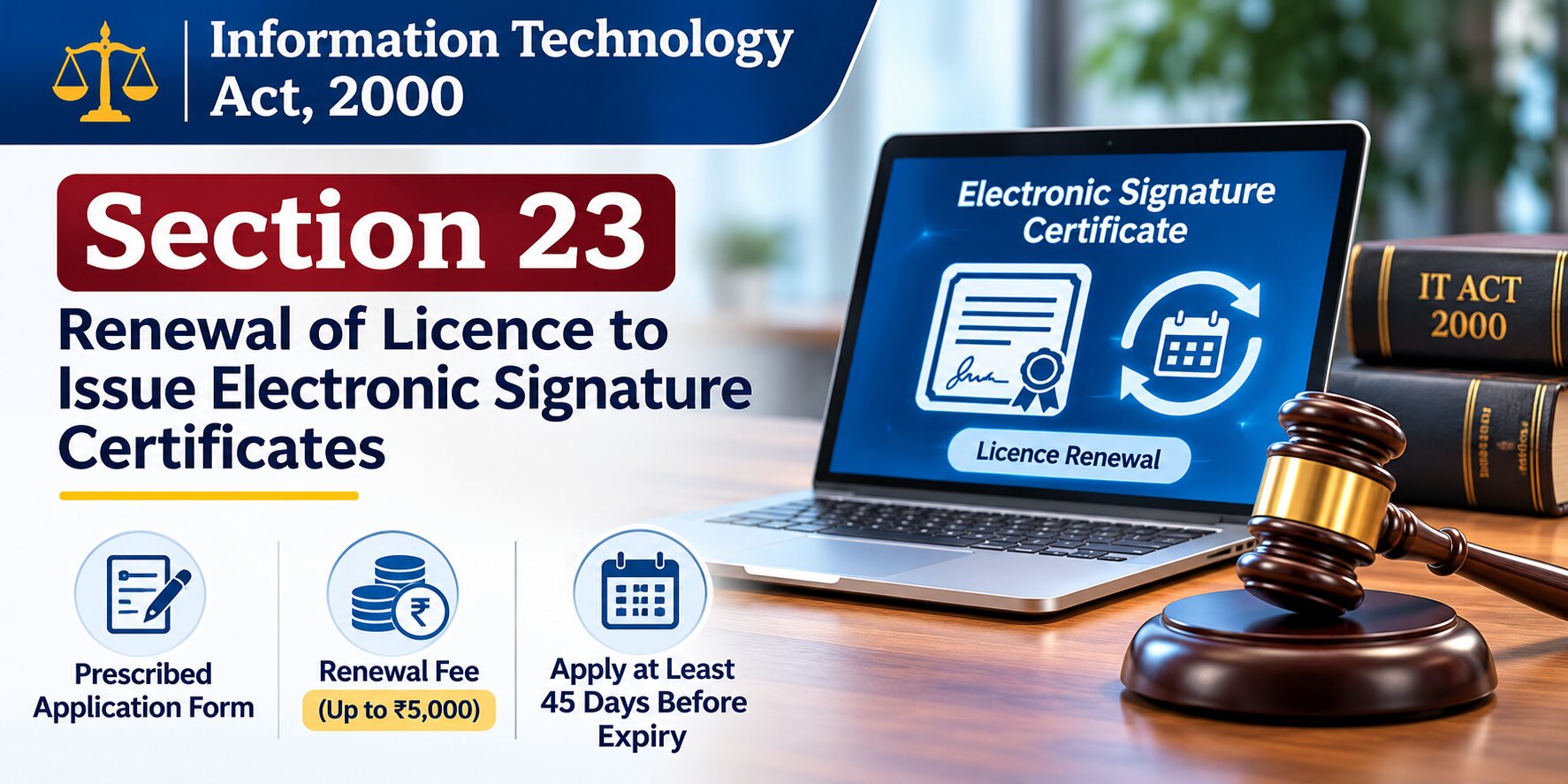
| Section 23 | Renewal of licence |
| Section 24 | Procedure for grant or rejection of licence |
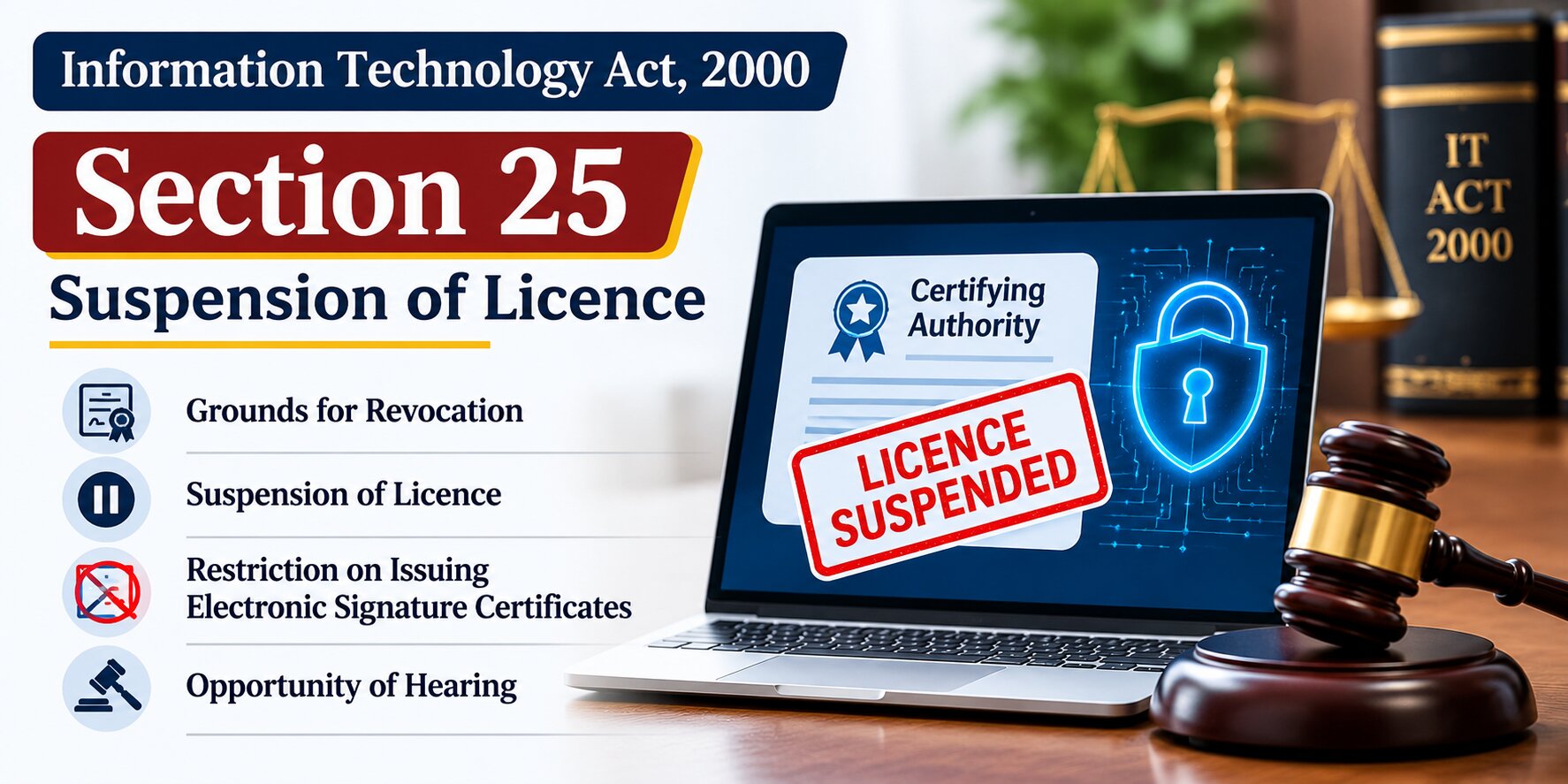
| Section 25 | Suspension and revocation of licence |
These provisions collectively regulate entry into, continuation of and compliance within the electronic certification system. India Code
Can Rejection of a Licence Be Challenged?
A decision rejecting a licence application may be challenged through an appropriate legal remedy where the applicant establishes grounds such as procedural unfairness, violation of statutory requirements or arbitrary exercise of power.
Failure to provide the reasonable opportunity expressly required under Section 24 may be a significant ground of challenge.
However, the availability of a particular remedy depends on the nature of the decision, the applicable statutory framework and the circumstances of the case.
Conclusion
Section 24 of the Information Technology Act, 2000, establishes an important procedure for granting or rejecting licences to Certifying Authorities in India.
It empowers the Controller to examine applications, evaluate supporting documents and consider relevant factors before reaching a decision. At the same time, its proviso protects applicants by requiring a reasonable opportunity to present their case before rejection.
The provision therefore balances regulatory supervision with procedural fairness. Its effective implementation helps maintain confidence in electronic signature certification and supports the security and reliability of digital transactions in India.
Leave a Reply