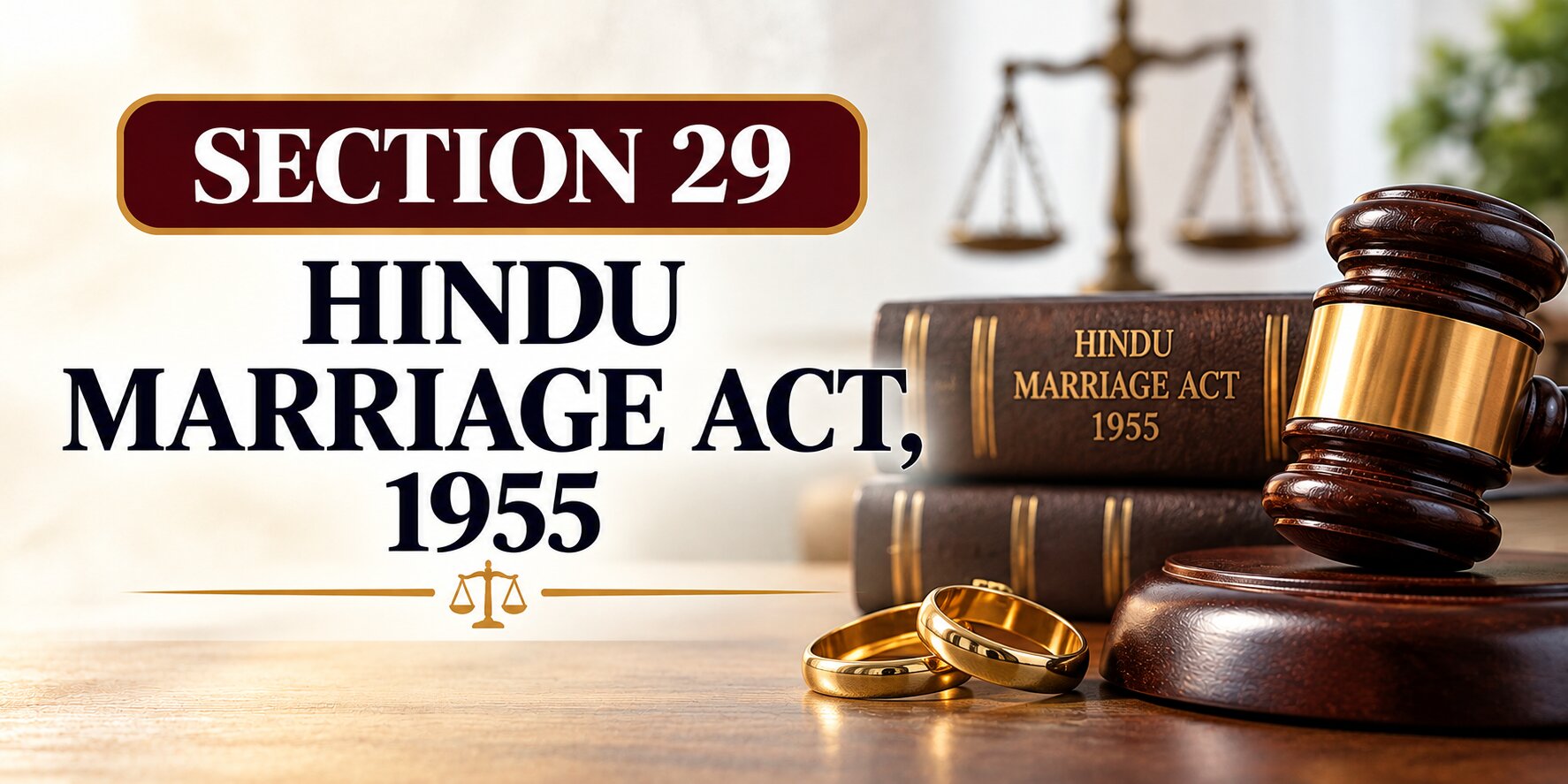
Section 29: Savings and Legal Provisions
Section 29(1)
A marriage solemnized between Hindus before the commencement of this Act, which is otherwise valid, shall not be deemed to be invalid or ever to have been invalid by reason only of the fact that the parties thereto belonged to the same gotra or pravara or belonged to different religions, castes or sub-divisions of the same caste.
Section 29(2)
Nothing contained in this Act shall be deemed to affect any right recognised by custom or conferred by any special enactment to obtain the dissolution of a Hindu marriage, whether solemnized before or after the commencement of this Act.
Section 29(3)
Nothing contained in this Act shall affect any proceeding under any law for the time being in force for declaring any marriage to be null and void or for annulling or dissolving any marriage or for judicial separation pending at the commencement of this Act, and any such proceeding may be continued and determined as if this Act had not been passed.
Section 29(4)
Nothing contained in this Act shall be deemed to affect the provisions contained in the Special Marriage Act, 1954 (43 of 1954), with respect to marriages between Hindus solemnized under that Act, whether before or after the commencement of this Act.
Explained:
Section 29 of the Hindu Marriage Act, 1955 deals with savings and protects certain rights relating to Hindu marriages and their dissolution. It preserves the validity of certain marriages solemnised before the Act came into force, recognises customary rights to divorce and protects specified legal proceedings and marriages governed by the Special Marriage Act, 1954.
Explanation of Section 29
Section 29 contains four important sub-sections.
Section 29(1): Validity of Certain Marriages
A marriage solemnised between Hindus before the commencement of the Act shall not be considered invalid merely because the parties belonged to the same gotra or pravara, or to different religions, castes or sub-divisions of the same caste, provided the marriage was otherwise valid.
Section 29(2): Customary Divorce
This provision recognises the right to dissolve a Hindu marriage through a valid custom or under a special enactment. However, the person relying on customary divorce must establish that the custom exists, has been consistently followed and is not unreasonable or opposed to public policy. A divorce agreement alone does not automatically establish a legally valid customary divorce.
Section 29(3): Pending Legal Proceedings
Proceedings pending when the Act commenced, relating to nullity, annulment, dissolution of marriage or judicial separation, are protected. Such proceedings may continue and be decided as if the Act had not been passed.
Section 29(4): Special Marriage Act
This provision preserves the application of the Special Marriage Act, 1954, to marriages between Hindus solemnised under that legislation.
Important Judgments on Section 29
1. Sanjana Kumari v. Vijay Kumar (2023)
The Supreme Court emphasised that customary divorce must be specifically pleaded and proved through convincing evidence. A divorce deed cannot be accepted as legally effective merely because the parties executed it.
2. Subramani v. M. Chandralekha (2005)
The Supreme Court held that a person claiming customary divorce must specifically plead and establish the existence of the relevant custom.
3. Yamanaji H. Jadhav v. Nirmala (2002)
The Supreme Court reiterated that customary divorce, being an exception to the general law, must be properly pleaded and proved by the person relying on it.
Conclusion
Section 29 of the Hindu Marriage Act, 1955, preserves specific marriage-related rights and legal arrangements. Its most significant aspect is Section 29(2), which permits customary divorce where a legally recognised custom is established. Courts carefully examine the evidence before accepting such a divorce as valid.
Leave a Reply